Saints Peter & Paul
Hermitage
History of the Hermitage
A Monastery
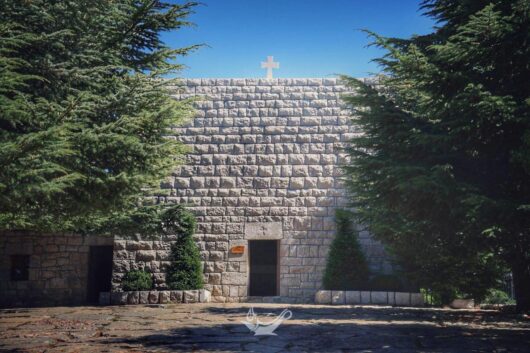
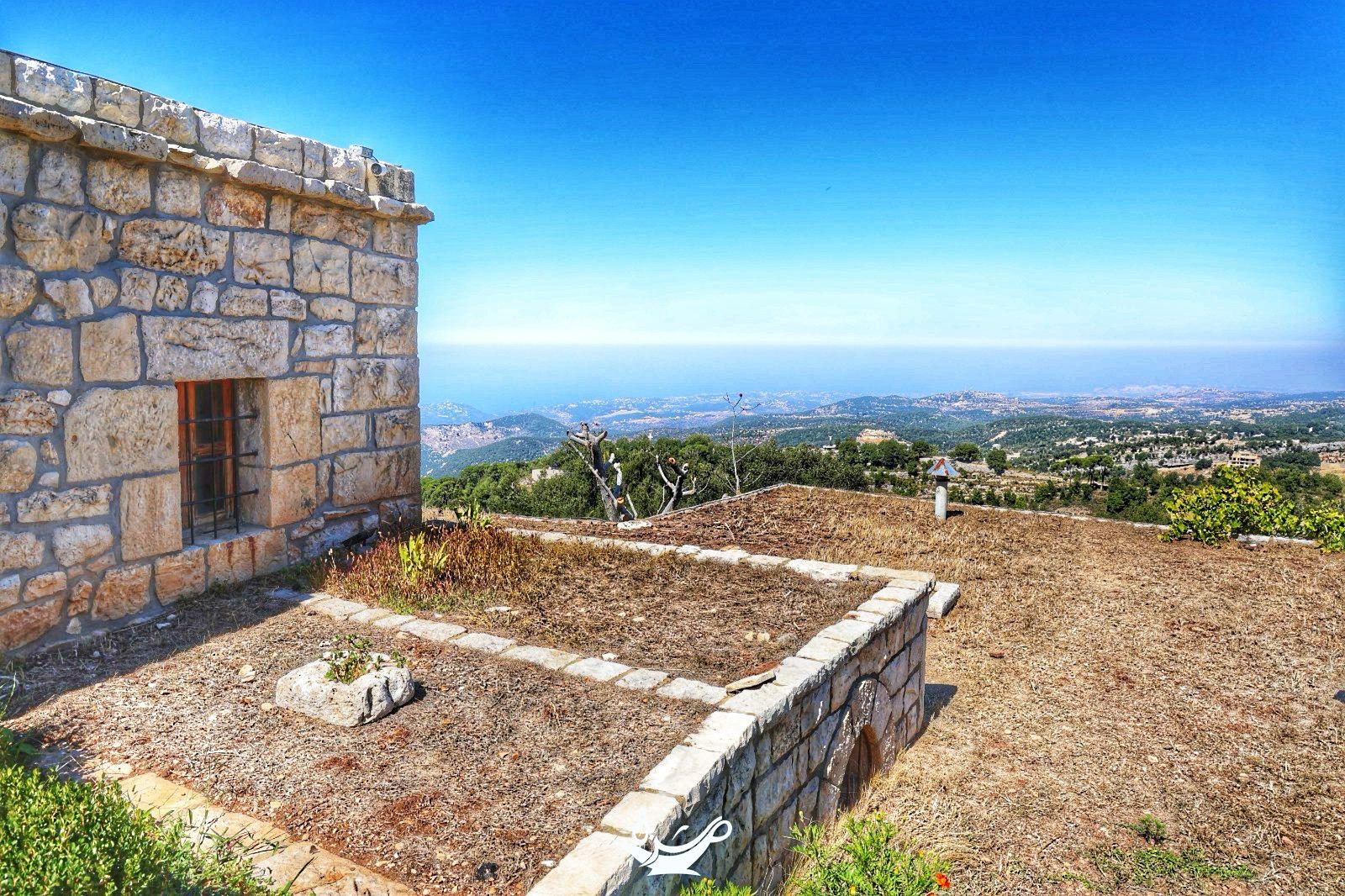
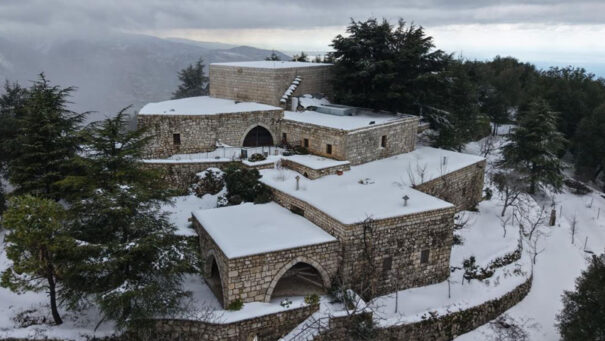
In 1798, a hundred years prior to St Charbel’s death, Yussef Bou Ramya and Daoud Issa Khalife from Ehmej built a monastery on the Annaya Rouasy hill. Youssef and Daoud finished constructing the monastery in 1811. They called the place of worship, which was built on old ruins, “The Lord's Transfiguration”. Their purpose was to refrain themselves to the hermit’s life.
A Church
On August 9th, 1812, the Maronite patriarch Youhanna El Helou changed the place of worship's name from “Transfiguration” to the two apostles, Peter & Paul whose feast is on June 29th. Since then, the monastery has been known as “St Peter & Paul church”.
During that period, there was a need for a priest to take care of the spiritual service. Therefore, Youssef and Daoud asked the order’s general superior, Father Egnatious Bleibel, on November 20th, 1814, for a priest to serve this mission. They gave him full authorization in the house of worship and its land.
Starting from 1814, those worshippers abandoned the site of St Peter & Paul as well as surrounding property and followed the Lebanese Maronite Monastic Order. Brother Youssef remained in St Maroun Church, Annaya till he passed away after a righteous old age.
An Hermitage
The “St Peter & Paul Monastery” later became a hermitage in around 1828, the year in which the first construction was completed in Saint Maroun Monastery - Annaya, and which was the birth year of St Charbel. The first hermit from the Order to enter this hermitage was Father Elisha El Hardini, Saint Nimutallah El Hardini’s brother.
Hermits of Annaya Hermitage
(1798-1967)
1798 - 13/02/1875
Father Elisha Kassab El Hardini
Father Nimutallah El Hardini’s brother. He first joined Kozhaya’s hermitage on November 29th, 1828 and a year and a half later, he moved to the Annaya hermitage, where he lived for more than 43 years. He then died on February 13th, 1875. He was active at work. It was he who tiled the hermitage carrying its tiles on his back from a distant area. He also planted the vineyard in the eastern part of the hermitage after cutting the trees and preparing the land by ploughing it till it became sowing worthy.
1821 - 1859
Father Youhanna El Akoury
Dwelled in the hermitage for a period of time with Father Elisha, then he returned to the monastery.
+1847
Father Youwakim El Zouky
He lived in the hermitage for a long time with Father Elisha, and then he returned to the Houb hermitage, where he died.
1823 - 07/08/1914
Father Libaos El Ramaty
He moved a number of hermitages, and he lived with Father Elisha for five years and with St Charbel for eighteen years. He was later transferred to Al Kattara hermitage, where he died after 21 years.
08/05/1828 - 24/12/1898
Saint Charbel Makhlouf
St Charbel entered the hermitage on February 15th, 1875, which was after Father Elisha's death, and he died there, when Father Antonious El Mishmishani was in office.
1840 - 10/10/1914
Father Makarios Sawma El Mishmishani
He entered the hermitage in 1880, and remained there till his death. He was St Charbel’s friend.
1849 - 17/05/1930
Father Antonious El Ghalbouni
He lived a period of time in the Annaya hermitage, then he was transferred to the El Kattara hermitage where he died.
1870 - 11/02/1946
Father Antonious El Hasarati
He lived in the Annaya hermitage for 26 years and died there.
1860 - 17/09/1942
Brother Boutros El Mishmishani
He served the hermits for 30 years.
1841 - 23/06/1901
Brother Mikhael El Tannoury
He humbly and faithfully served the hermits.
1883 - 08/07/1958
Father Antonious Kozhaya from Kour-Batroun
He was a diocesan priest. He then became a monk who served the hermits. Later, he became a hermit and died.
1870 - 21/03/1967
Father Elias Abi Ramia El Ahmajy
He served the hermits for a period of time. He was the last to live with St Charbel and the last hermit to live in the hermitage, because, after 1950, with the spread of St Charbel’s miracles, the hermitage was gradually converted into an international shrine.