
The Lebanese Maronite Order
A Monastic Order Born in Lebanon
History of the
Lebanese Maronite Order
The following is from the Constitutions of the Lebanese Maronite Order - OLM:
"The Lebanese Maronite Order is one of the authentic monastic life systems… and it goes on according to the monastic tradition in the spirit of the Maronite, Syriac and Antioch Church… Our Order adopts community life and life of prayer, silence, tranquillity and ascetic acts. It is also committed to apostolic acts, going from the monastery and returning to it, according to its history and to the need of the Church".
The Lebanese Maronite Order was founded by young Maronites from Aleppo who took the monastic habit by patriarch Estephan El-Dowaihy in the Lady of Kannoubeen monastery, on the 10th of November in 1695. Since then, this date has become the commemoration day of the foundation of the Lebanese Maronite Order.
The founders first lived in the “Mart Moura” monastery, near Ehden, after they had restored it. Then, they expanded and were handed the monastery of St Elisha in Becharri in 1696. And since the beginning of the eighteenth century, the Monastic Order has spread throughout Lebanon. Hence, a series of foundation of some monasteries, such as St John Richmaya, in Shoof in 1706, Lady of Louazi in Kisriwan in 1706, St Antonios Syr near Rishmaya in 1707, St Antonios Kozhaya near Ehden in 1708 and others, began.
In 1732, the Apostolic See made the monastic rules official. These rules became a source of many monastic rules. In 1770, the Lebanese Maronite Order was divided into two branches: The Aleppan Maronite Order (Marian) and the Lebanese Maronite Order. Starting from 1737, the Monastic Order has begun expanding outside the borders of the Lebanese Mountains. Therefore, foundation in Cyprus, Akka, Rome, Sidon and Tripoli took place.
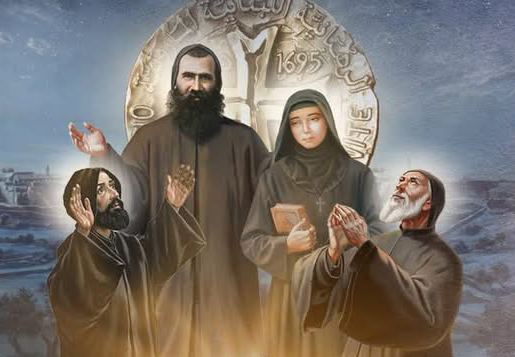
In the nineteenth century, the Monastic Order took special care in training its individuals and the teaching in addition to the interest in development. However, this didn’t abolish its spiritual and hermitical role. It exposed pure monastic figures who reflected the indigenous monastic history as Saint Charbel, Saint Rafqa, Saint Nimatullah and others. In the twentieth century, and with the augmentation of the Lebanese emigration abroad, the Order began founding missions in Senegal, Argentina, Brazil, Ivory Coast, Mali, Mexico, Australia, Canada, England, France, Italy and Venezuela, in addition to strengthening Cyprus, Jaffa, Bethlehem and Jerusalem.
The Order participated in developing the cultural and university sector, especially through the Holy Spirit University of Kaslik and for its mission to be humanitarian, it founded the Hospital of Lady of Deliverance and the Beit Shabab Institute, the latter being specialized for the disabled. The Order accompanied all those who travelled abroad and participated in the stability of its people in their homeland. It was also on their side during the world, regional and local wars. It suffered the agony of war, was made homeless. Some of its foundations were destroyed. It was persecuted, and it lost some of its monks. When the time came to return home, it was one of the first who returned and rebuilt what had been destroyed. Its belief is that the earth is a gift and a vocation. Those who abandon it lose their identity and forgo their history.
Today, the Order progresses through its member activities in its male and female branches, in more than 80 monasteries and foundations in Lebanon and abroad.
Pillars of a Monastic Legacy
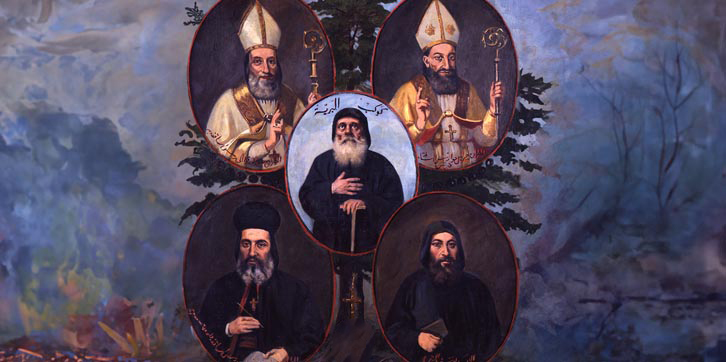
Founders of the OLM
The visionaries whose faith and leadership shaped the OLM from its origins.
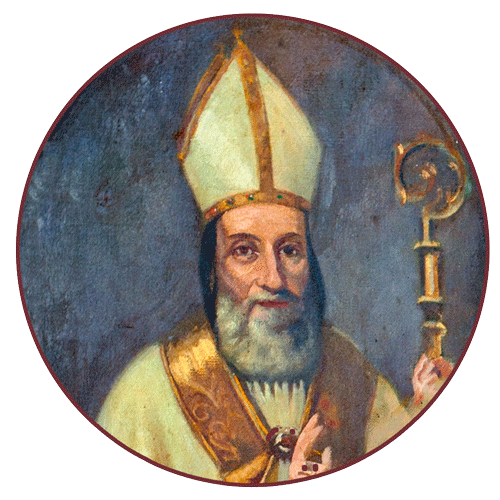
Abdallah Qaraali (1672-1742)
Born in Aleppo in 1672, he undertook, starting in 1695 with his companions, the reform of monastic life in the Maronite Church. Ordained a priest in 1696, he became the second Superior General of the Order from 1669 to 1716, when he was consecrated bishop of Beirut. He is considered the foremost reformer of Eastern monasticism. His writings, letters, poetry, and pandects are of great value. He played an important role in the Lebanese Council of 1736. He died in 1742.
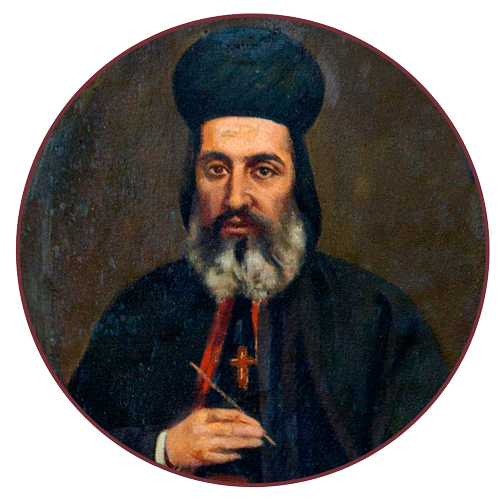
Germanos Farhat (1670-1732)
Born in Aleppo in 1670, where he received a strong literary, philosophical, and theological education. In 1695, he joined his compatriots at the Monastery of St. Elisha (Bcharri). Between 1705 and 1716, he was sent on several delicate missions in Syria and Europe before being elected Superior General of the Order from 1716 to 1723. In 1725, he was ordained Bishop of Aleppo, where he died in 1732. He gained significant literary renown and became a cultural pillar of the “Renaissance” era.
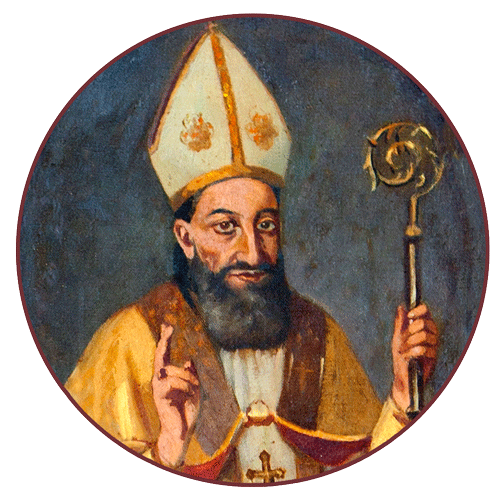
Gabriel Hawa (1668-1752)
Born in Aleppo in 1668, he was ordained a priest in 1695 and became the first Superior General of the Lebanese Maronite Order from 1695 to 1699. His vision of an organization fully devoted to mission and pastoral work did not align with the views of his companions. He left the Order in 1699 and went to Rome. Appointed Bishop of Cyprus in 1723, he carried out several missions for Eastern Churches in the context of Roman Uniatism. He died in 1752.
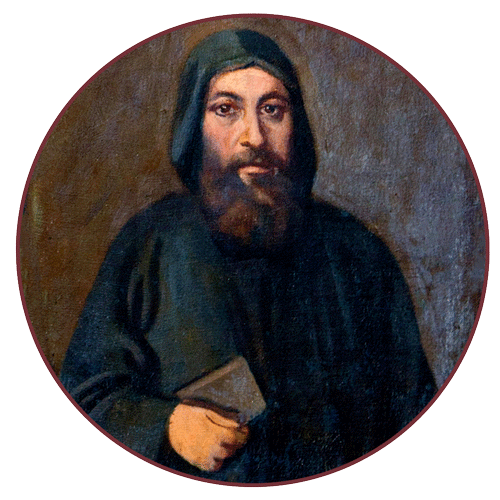
Youssef Al-Bitn (1679-1714)
Also a native of Aleppo, he was born in 1679. He arrived on Mount Lebanon with Qaraali and Hawa and was ordained a priest in 1706. Al-Bitn did not attain any higher leadership position within the Order. He was, in fact, a behind-the-scenes figure who managed the internal affairs of the monasteries that had already been restored or founded. He was accidentally killed in a rock collapse at the Monastery of St. Anthony of Qozhaya in November 1714. A large rock in the monastery garden still bears the name “the Rock of al-Bitn”.